All Stories
2 min

KION and Siemens Launch Strategic Partnership

To unlock the full potential of physical AI, KION has entered into a strategic partnership with Siemens – a global leader in industrial AI. Announced at Hannover Messe 2026, this collaboration provides KION with another powerful lever to make complex logistics processes more predictable and efficient. This is exactly where KION and Siemens are joining forces. Building on their already close collaboration, the two companies have formed a strategic partnership to further advance intralogistics through artificial intelligence, automation, and cutting-edge simulation technology.

2026-04-21

Johanna Werner
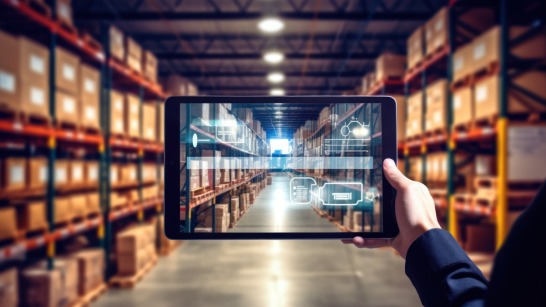
At the heart of the collaboration is a shared vision: the intelligent warehouse, where physical operations and the digital world seamlessly interact. Cameras and sensors continuously capture data from ongoing operations. Artificial intelligence analyzes this information and creates digital twins – virtual representations of machines, systems, or even entire logistics centers. In this digital environment, processes can be simulated, tested, and optimized – often long before any change is implemented in the real warehouse.

A key milestone: KION will be the first company in Europe to deploy Siemens’ new Digital Twin Composer software. The solution allows complex logistics processes to be simulated in parallel and in real time. In practice, this means KION can virtually test different warehouse layouts or process changes and immediately see how they affect performance and throughput. As a result, decisions can be made faster, based on solid data and with greater confidence.

Supply chains today have to be efficient, but above all resilient,” says Cedrik Neike, Member of the Managing Board at Siemens AG and CEO of Siemens Digital Industries. “Together with KION, we are using a comprehensive digital twin and industrial AI to turn the warehouse from a physical hub into the digital nerve center of the supply chain – laying the foundation for greater resilience and flexibility.”

The partnership between KION and Siemens builds on an already close working relationship. Today, KION already uses several Siemens solutions for product lifecycle management. With the new Digital Twin Composer, KION is creating an even more powerful environment: intralogistics solutions can be managed across their entire lifecycle – from planning and implementation to live operations and continuous optimization.

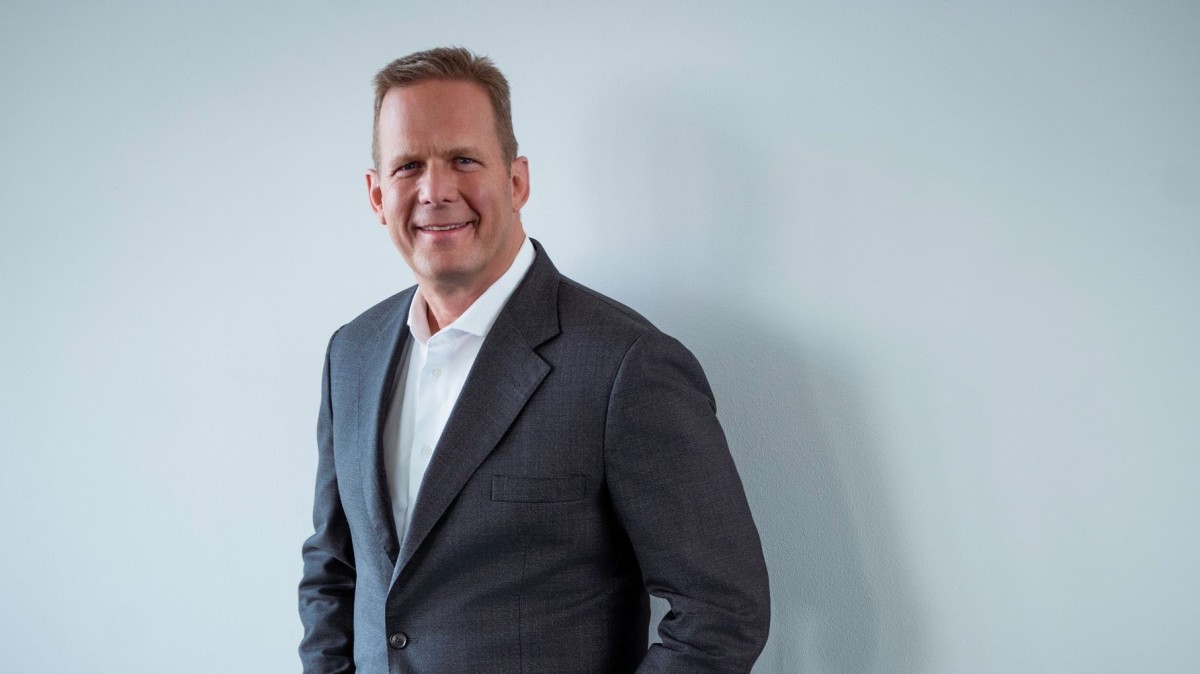
“As The Supply Chain Solutions Company, KION orchestrates end-to-end solutions for its customers within warehouses and factories, and eventually across the entire supply chain. With Siemens as a strategic partner, KION is strengthening its ability to combine the digital and physical worlds at scale. This takes our digital twin-based solutions to a new level.”
- Rob Smith, CEO KION

As part of the partnership, KION and Siemens have also agreed to exchange selected industrial data. KION will contribute anonymized test data as well as extensive experience from real-world warehouse environments. These data will help develop a so-called Industrial Foundation Model, designed to scale the benefits of industrial AI across different processes and application areas.

You can think of this model as an AI specifically designed for engineers. While conventional AI models perform well with text or images, they often struggle with complex engineering data. Siemens’ Industrial Foundation Model, in contrast, is designed to understand the “language” of industrial manufacturing.

Together, KION and Siemens are using this intelligence for generative product design. The AI model is currently being trained with historical test data and simulations to develop the next generation of components – for example a fork carriage. The AI analyzes historical datasets and proposes optimized, highly durable, and efficient designs. This can significantly accelerate engineering cycles.

The partnership demonstrates what is possible when technological innovation meets industrial expertise. Together, KION and Siemens are working to ensure that the supply chains of the future are not only more efficient, but also smarter and more resilient.